
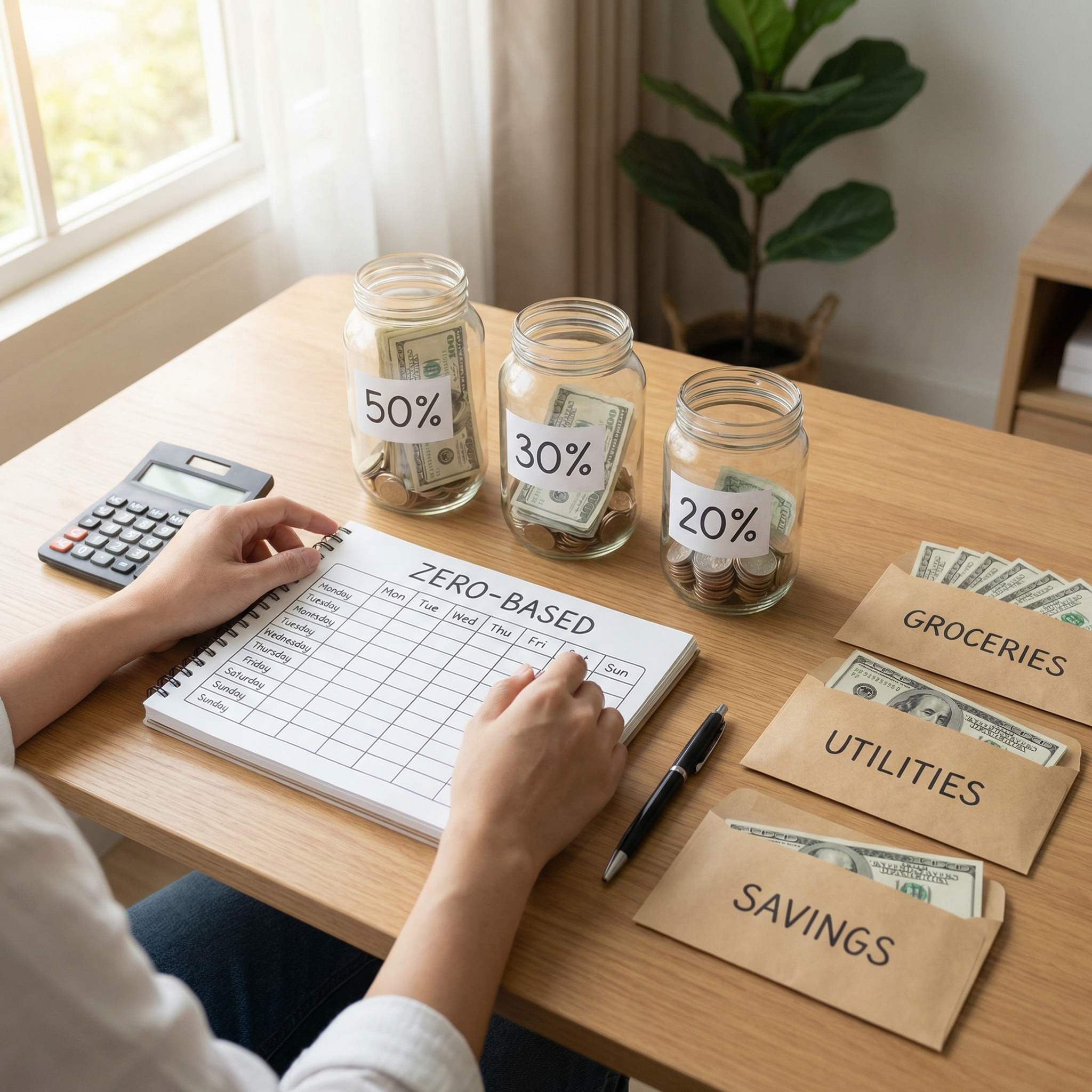
Understanding Household Budgeting Methods
Managing a household budget effectively is crucial for financial stability and peace of mind. Different budgeting methods suit different lifestyles and financial goals. This article explores three popular approaches—the zero-based budget, the 50/30/20 rule, and the envelope system—helping you choose and maintain the best fit for your household.
Zero-Based Budget: Every Dollar Has a Purpose
The zero-based budget requires assigning every dollar of your income to a specific expense, savings, or debt payment until nothing is left unallocated. This method promotes intentional spending and tight financial control.
To create a zero-based budget, start by listing all sources of monthly income. Next, identify all expenses—fixed and variable—and allocate funds accordingly. The goal is to reach a zero balance, meaning all money is accounted for.
- Track all expenses closely to avoid surprises.
- Adjust allocations monthly as income or expenses change.
- Include savings goals within the budget to build financial security.
The 50/30/20 Rule: Simple and Flexible
The 50/30/20 budgeting method divides your after-tax income into three main categories: 50% for needs, 30% for wants, and 20% for savings or debt repayment. This approach offers a straightforward framework for balancing essential expenses with discretionary spending.
To implement the 50/30/20 rule, calculate your total monthly take-home pay. Allocate half of that to necessities like housing, utilities, groceries, and transportation. Then, assign 30% to lifestyle choices such as dining out, entertainment, and hobbies. Finally, dedicate 20% to savings accounts, emergency funds, or paying down debt.
- Review categories regularly to ensure accuracy.
- Prioritize high-interest debt in the savings/debt repayment portion.
- Adjust the percentages if needed to better fit your financial situation.
Envelope Method: Cash-Based Control
The envelope method involves allocating cash into separate envelopes labeled for different spending categories. This tangible system helps limit overspending by physically restricting the money available per category.
Begin by determining your monthly budget categories—such as groceries, transportation, and entertainment—and assign a cash amount to each based on your budget plan. When the cash in an envelope runs out, no more spending is allowed in that category until the next budgeting period.
- Use envelopes for variable expenses to build mindful spending habits.
- Combine with digital tracking for fixed expenses paid electronically.
- Adjust envelope amounts monthly based on past spending patterns.
Choosing the Right Method for Your Household
Selecting the best budgeting method depends on your financial goals, income stability, and spending habits. Zero-based budgeting suits those who want detailed control and are comfortable with frequent adjustments. The 50/30/20 rule appeals to individuals seeking simplicity and flexibility. The envelope method works well for cash-preferred households aiming to curb impulsive spending.
Consider combining elements of each method to create a personalized system. For example, use the zero-based approach for monthly planning and the envelope system for daily discretionary expenses.
- Assess your financial discipline and willingness to track expenses.
- Identify your spending triggers and areas needing control.
- Experiment with each method before committing fully.
Maintaining Your Budget Over Time
Creating a budget is only the first step; consistent maintenance is key to long-term success. Regularly reviewing and updating your budget ensures it reflects changes in income, expenses, and goals.
Set aside time monthly to analyze your spending, adjust allocations, and evaluate progress toward savings or debt reduction. Staying flexible helps you adapt to unexpected expenses without losing sight of your financial plan.
- Use budgeting apps or spreadsheets to simplify tracking.
- Involve household members in budgeting decisions for shared accountability.
- Celebrate milestones to stay motivated.
Tips for Successful Budgeting
Regardless of the method chosen, some universal strategies enhance budgeting effectiveness. Start by setting clear financial goals, whether it’s saving for a home, paying off debt, or building an emergency fund. Prioritize these goals within your budget allocations.
Maintain discipline by avoiding impulse purchases and distinguishing between needs and wants. Regularly revisit your budget to identify any areas where spending can be trimmed or savings increased.
- Automate savings transfers to make saving effortless.
- Keep an expense journal to identify spending habits.
- Seek support or advice when facing budgeting challenges.