
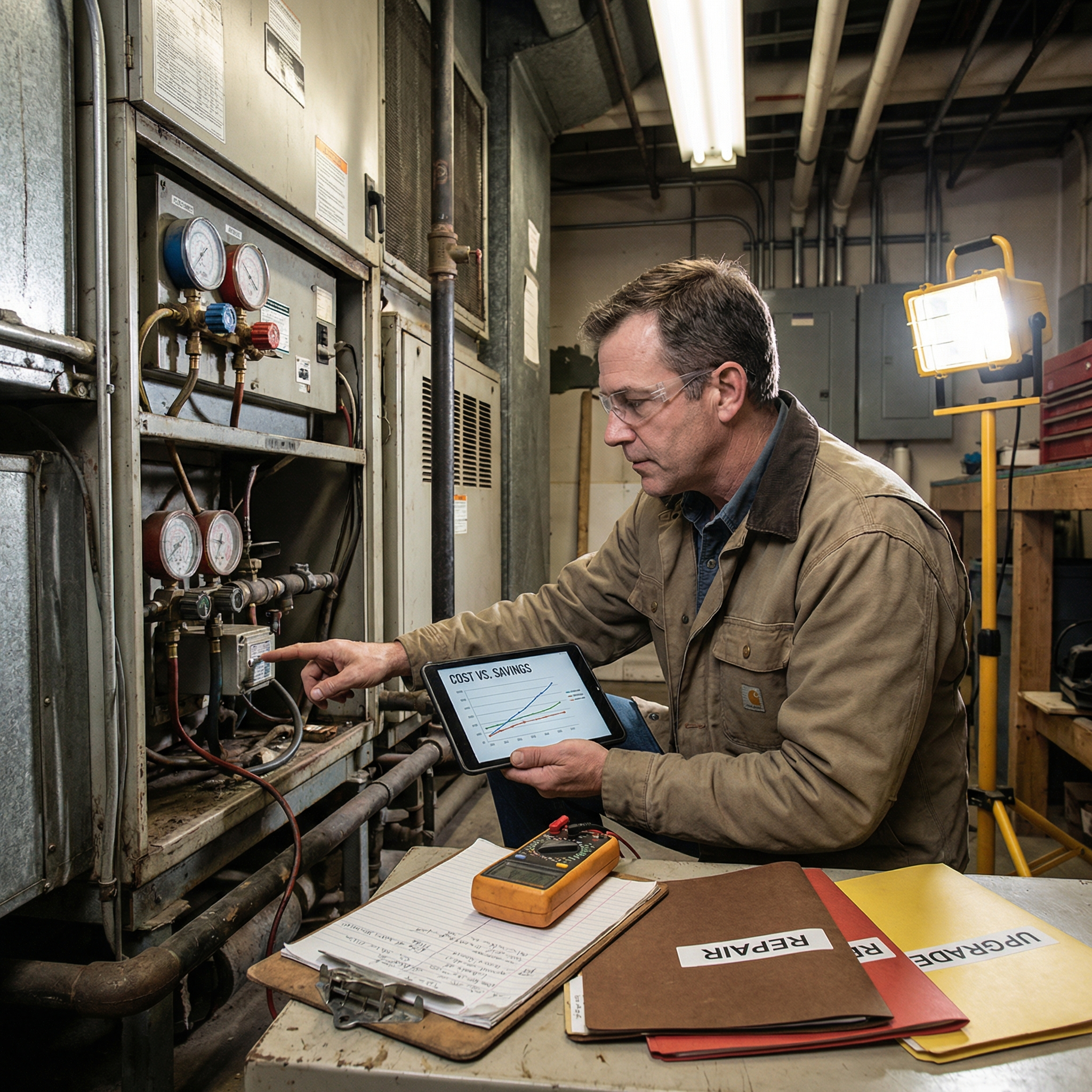
Understanding the Importance of HVAC Investment Decisions
Deciding whether to upgrade, repair, or replace your HVAC system can be a complex choice that impacts comfort, energy costs, and long-term savings. Evaluating the return on investment (ROI) helps homeowners and business owners make informed decisions that align with their financial and operational goals.
Before diving into numbers, it’s essential to understand how each option affects system performance and costs over time. A well-analyzed ROI can prevent unnecessary expenses and maximize the efficiency of your heating and cooling solutions.
Assessing Current HVAC System Performance
Start by evaluating the existing HVAC system’s age, condition, and efficiency. Older systems often consume more energy and require frequent repairs, which can increase operational costs.
Key factors to assess include:
- Energy consumption compared to newer models
- Frequency and cost of recent repairs
- Comfort levels and air quality within the space
Gathering this information helps quantify ongoing expenses and highlights potential savings from upgrading or replacing the system.
Calculating Repair Costs Versus Benefits
Repairs can extend the life of your HVAC system but might not always be the most cost-effective choice. Investigate whether the repair costs are a fraction of the system’s value or if they signal deeper issues.
Consider these points when evaluating repairs:
- Is the repair a temporary fix or a permanent solution?
- Will the repair improve energy efficiency or system reliability?
- How often have repairs been necessary in the past year?
If repair expenses approach 50% or more of the replacement cost, replacement might yield a better ROI.
Benefits of Upgrading HVAC Components
Upgrading parts of your HVAC system, such as thermostats, ductwork, or compressors, can improve efficiency without the expense of a full replacement. These targeted improvements often balance cost and performance gains effectively.
Advantages of strategic upgrades include:
- Lower immediate costs compared to full system replacement
- Enhanced energy savings through modern technology
- Improved system responsiveness and user control
Evaluating the ROI of upgrades involves estimating energy savings and reduced maintenance over time.
When Replacement Offers the Best ROI
Replacing an HVAC system is generally the most expensive option upfront but can deliver the highest long-term returns. Newer systems are designed for improved efficiency, quieter operation, and better environmental compliance.
Replacement is often justified when:
- The current system is over 10-15 years old
- Frequent breakdowns disrupt comfort and productivity
- Energy bills are consistently high despite repairs
Calculating ROI here involves comparing installation costs against projected energy savings and lower repair expenses over the system’s lifespan.
Estimating Energy Savings and Cost Reductions
Energy efficiency is a critical factor in determining ROI. New HVAC systems often carry Energy Star ratings or similar certifications that guarantee reduced energy use.
To estimate savings:
- Review your current energy bills to establish a baseline
- Use manufacturer data or professional assessments to estimate expected efficiency improvements
- Calculate potential reductions in utility costs over 5 to 10 years
This approach provides a clear financial picture and helps justify investment decisions.
Considering Environmental and Comfort Factors
Beyond pure financial metrics, upgrading or replacing an HVAC system can enhance indoor air quality and reduce environmental impact. Improved filtration and energy efficiency contribute to healthier living and working spaces.
Important considerations include:
- Reduction in greenhouse gas emissions
- Better temperature control and humidity management
- Compliance with evolving building codes and incentives
These benefits, while sometimes intangible, add value that complements the monetary ROI.
Final Thoughts: Making Informed HVAC Investment Choices
Evaluating the ROI of HVAC upgrades, repairs, or replacements requires a comprehensive look at costs, energy savings, system reliability, and comfort improvements. Collecting data on your current system’s performance, repair history, and energy usage forms the foundation for this evaluation.
Engage with HVAC professionals to obtain detailed estimates and energy analyses. With a clear understanding of potential savings and benefits, you can confidently choose the option that delivers the best value for your specific needs and budget.