
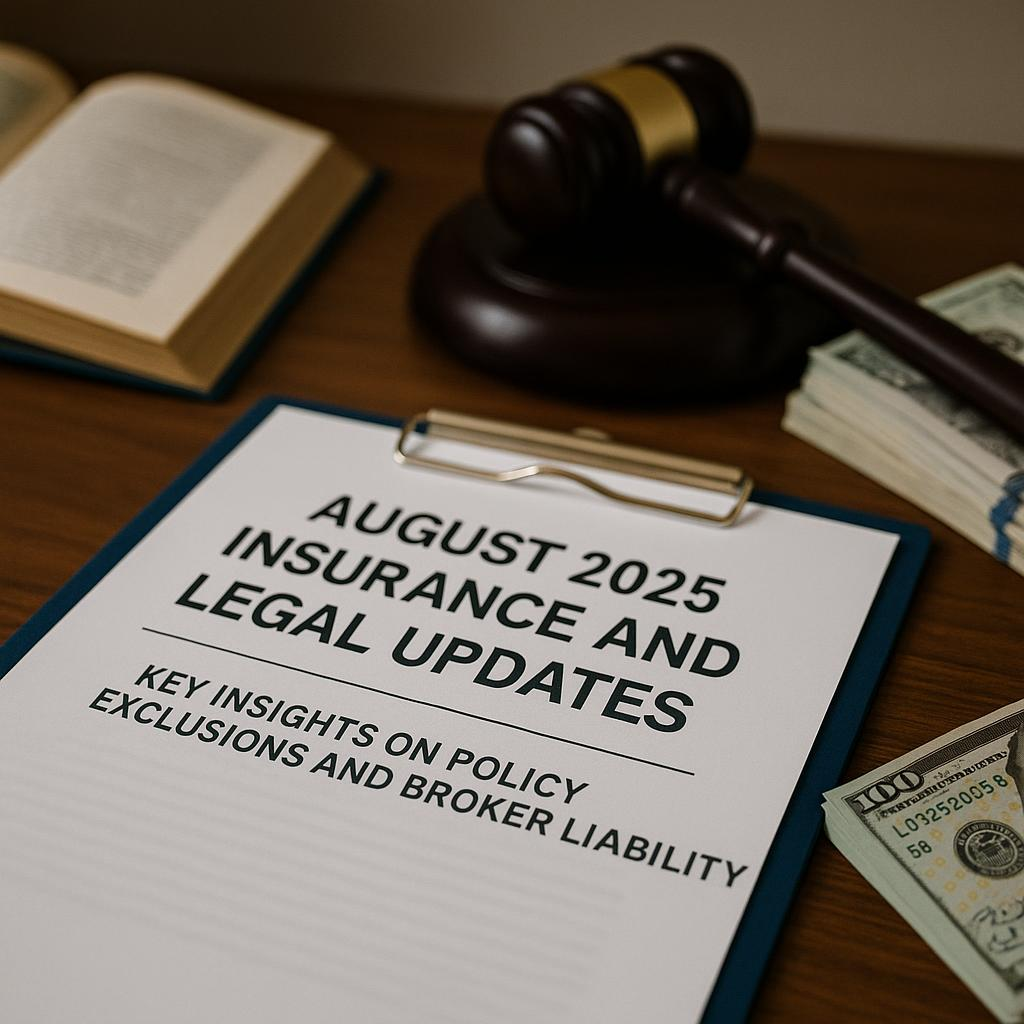
Understanding “Arising Out Of” in Insurance Policies
The phrase “arising out of” is a common but broad term found in many insurance policies. Courts generally interpret this language expansively, especially in exclusion clauses. Recently, several cases have clarified how this phrase can impact coverage, often applying a “but for” causation test. This means that even if the insured did not directly commit the excluded act, the exclusion can still apply if the claim would not have occurred without that act.
Notable Cases Highlighting the “Arising Out Of” Exclusion
Three recent cases illustrate this principle and its implications for insured parties:
- Texas: An assault and battery exclusion was enforced to bar coverage for negligence claims related to a shooting at a rave. The court found that the exclusion applied because the underlying harm arose out of the assault, even though the claim was framed as negligence.
- Georgia: Firearms-related exclusion clauses were scrutinized to determine if injuries could be linked back to excluded wrongful acts. The broad wording allowed courts to deny coverage because claims were sufficiently connected to the excluded conduct.
- Other jurisdictions continue to weigh in on similar exclusions, reinforcing the trend toward a stringent application of “arising out of” language in exclusions.
These cases demonstrate the importance of carefully reviewing policy language, especially exclusion clauses. Insureds should be aware that broad exclusion terms may limit coverage far beyond just the intentional or direct wrongful acts themselves.
Supreme Court Weighs in on Broker Liability Under the FAAAA
Turning to the transportation industry, the U.S. Supreme Court faces fresh petitions that could clarify broker liability under the Federal Aviation Administration Authorization Act (FAAAA). Specifically, the Court is asked to resolve a circuit split concerning negligent hiring claims against freight brokers.
The Core Issue: Preemption Versus the Safety Exception
The FAAAA generally preempts state laws related to motor carrier prices, routes, or services to maintain regulatory consistency in the transportation sector. However, it contains a safety exception preserving certain claims regarding motor vehicle safety.
Two recent petitions—Total Quality Logistics (TQL) v. Cox and Montgomery v. Caribe II—focus on whether negligent hiring claims against brokers fall within this safety exception or are preempted by federal law.
Implications of the Supreme Court’s Decision
The decision will affect how liability is assigned in transportation cases involving brokers, potentially altering risk management and contractual practices. Currently, differing appellate rulings mean some brokers may face liability exposure in certain circuits while being protected in others.
- Affirmation of preemption could limit brokers’ exposure to negligence claims, streamlining federal regulation.
- Recognition of the safety exception might expand brokers’ liability for hiring decisions impacting vehicle safety.
Stakeholders in the transportation industry should monitor these developments closely, as the outcome will influence litigation strategies and compliance approaches nationwide.
Key Takeaways for Insurance and Transportation Professionals
- Insurance policyholders must carefully analyze exclusion language regarding “arising out of” provisions, understanding that coverage may be denied even when not directly related to the excluded act.
- Legal counsel should advise clients about potential exposure under broad exclusions and focus on precise policy wording during underwriting and claims handling.
- Transportation companies and freight brokers need to be aware of the evolving legal landscape around the FAAAA and safety exceptions, especially concerning hiring practices and liability risks.
- Industry professionals should prepare for possible shifts in federal preemption doctrine that could impact litigation risk and operational policies in the near term.
Keeping informed about these evolving legal interpretations helps insureds and businesses navigate their coverage and liability challenges effectively. By understanding these nuances, stakeholders can better manage risks and make informed decisions in their industries.