
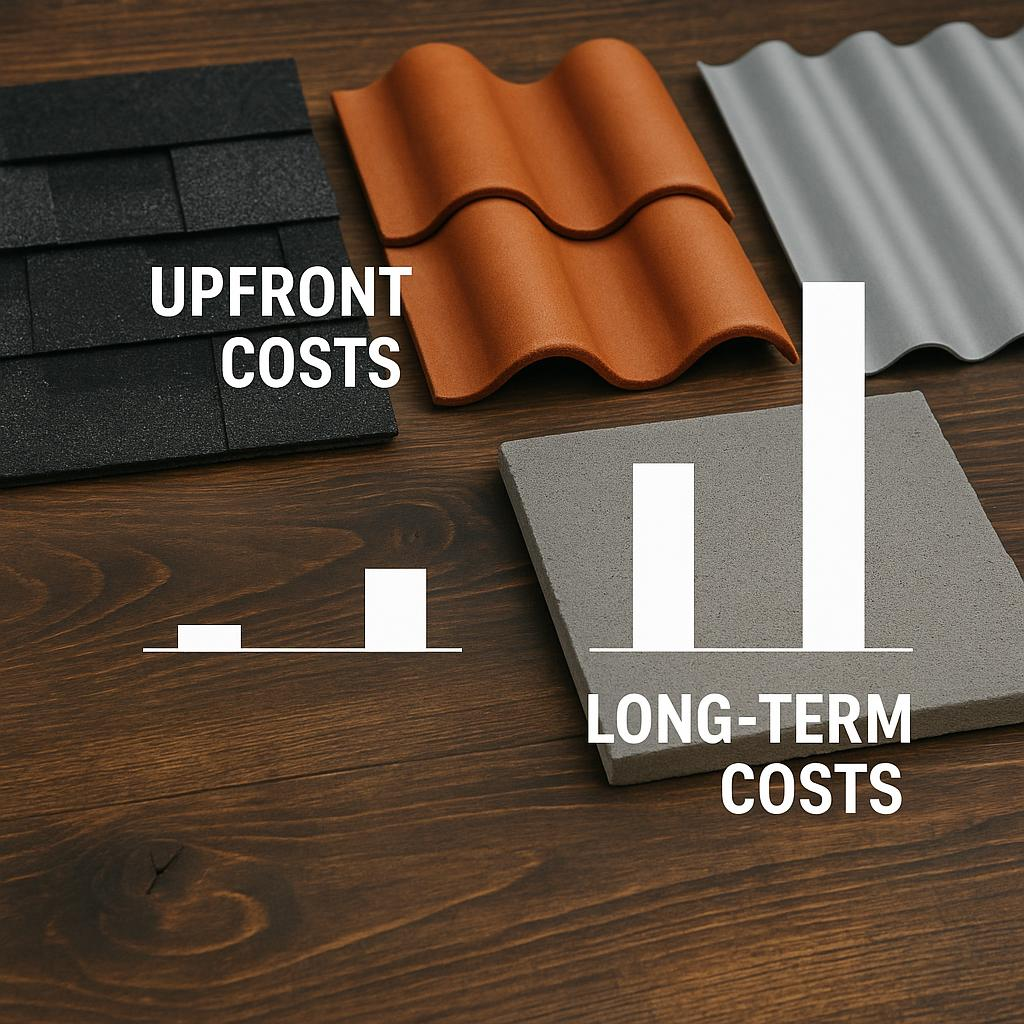
Understanding Roofing Costs: Upfront vs. Long-Term
Choosing the right roofing material involves more than just aesthetics. It requires a careful examination of both initial expenses and how those costs evolve over the lifespan of your roof. This guide breaks down common roofing options, helping you evaluate which material offers the best value for your investment.
Asphalt Shingles: Budget-Friendly and Widely Used
Asphalt shingles are among the most popular roofing materials due to their affordable upfront costs. Installation is straightforward, which keeps labor charges low and makes them a practical choice for many homeowners.
However, their lifespan typically ranges from 15 to 30 years. Over time, you may face repair or replacement costs sooner than with other materials. Asphalt shingles can also be susceptible to weather-related damage, increasing maintenance expenses.
- Upfront cost: Low to moderate
- Average lifespan: 15-30 years
- Maintenance: Periodic repairs may be necessary
Metal Roofing: Durable but Higher Initial Investment
Metal roofs stand out for their longevity, often lasting 40 to 70 years. While the upfront cost is higher than asphalt shingles, the durability can lead to fewer repairs and replacements over time, reducing long-term expenses.
In addition to durability, metal roofs are energy-efficient, which can lower heating and cooling costs. The installation process is more complex, so labor costs tend to be higher, but the trade-off is a roof that requires minimal upkeep.
- Upfront cost: Moderate to high
- Average lifespan: 40-70 years
- Maintenance: Low
Clay and Concrete Tiles: Longevity Meets Style
Clay and concrete tiles offer exceptional durability, often lasting over 50 years. Their higher upfront cost reflects the material expense and the need for specialized installation. However, this investment pays off with minimal maintenance and excellent weather resistance.
These tiles are heavy, which may require additional structural support, adding to initial costs. They also provide natural insulation benefits, potentially reducing energy bills in warm climates.
- Upfront cost: High
- Average lifespan: 50+ years
- Maintenance: Very low
Wood Shingles and Shakes: Natural Beauty with Maintenance Considerations
Wood roofing materials deliver a classic, natural look that many homeowners appreciate. Initial costs vary depending on the wood type, but generally, wood shingles and shakes are more expensive than asphalt shingles.
While wood roofs can last 20 to 40 years, they require regular maintenance to prevent issues like rot, insect damage, and mold. Over time, these upkeep costs can add up, impacting the total cost of ownership.
- Upfront cost: Moderate to high
- Average lifespan: 20-40 years
- Maintenance: Regular inspections and treatments needed
Synthetic Roofing Materials: Modern Alternatives with Varied Costs
Synthetic roofing options, such as rubber, plastic, or polymer composites, mimic traditional materials like slate or wood but often come at a lower upfront cost. They offer good durability, typically lasting 30 to 50 years depending on the product.
Maintenance requirements are generally low, and their lightweight nature can simplify installation, reducing labor costs. However, the quality and price vary widely, so choosing reputable products is essential to avoid premature replacement expenses.
- Upfront cost: Low to moderate
- Average lifespan: 30-50 years
- Maintenance: Low
Slate Roofing: High-End Investment with Exceptional Lifespan
Slate is known for its striking appearance and incredible durability, often lasting over a century. The upfront costs are among the highest due to material price and the need for skilled installation.
Despite this, slate roofs require minimal maintenance and rarely need replacement in a homeowner’s lifetime. The long-term savings on repairs and replacements can justify the initial expense for those seeking a lasting solution.
- Upfront cost: Very high
- Average lifespan: 75-100+ years
- Maintenance: Minimal
Key Takeaways for Budgeting Your Roof
When comparing roofing materials, remember that the lowest upfront cost doesn’t always mean the most economical choice over time. Consider these points:
- Evaluate the expected lifespan relative to replacement frequency.
- Factor in maintenance costs based on material durability and climate.
- Consider energy savings and possible insurance discounts linked to material type.
Ultimately, balancing your budget with long-term benefits ensures a roof that protects your home and investment effectively.