
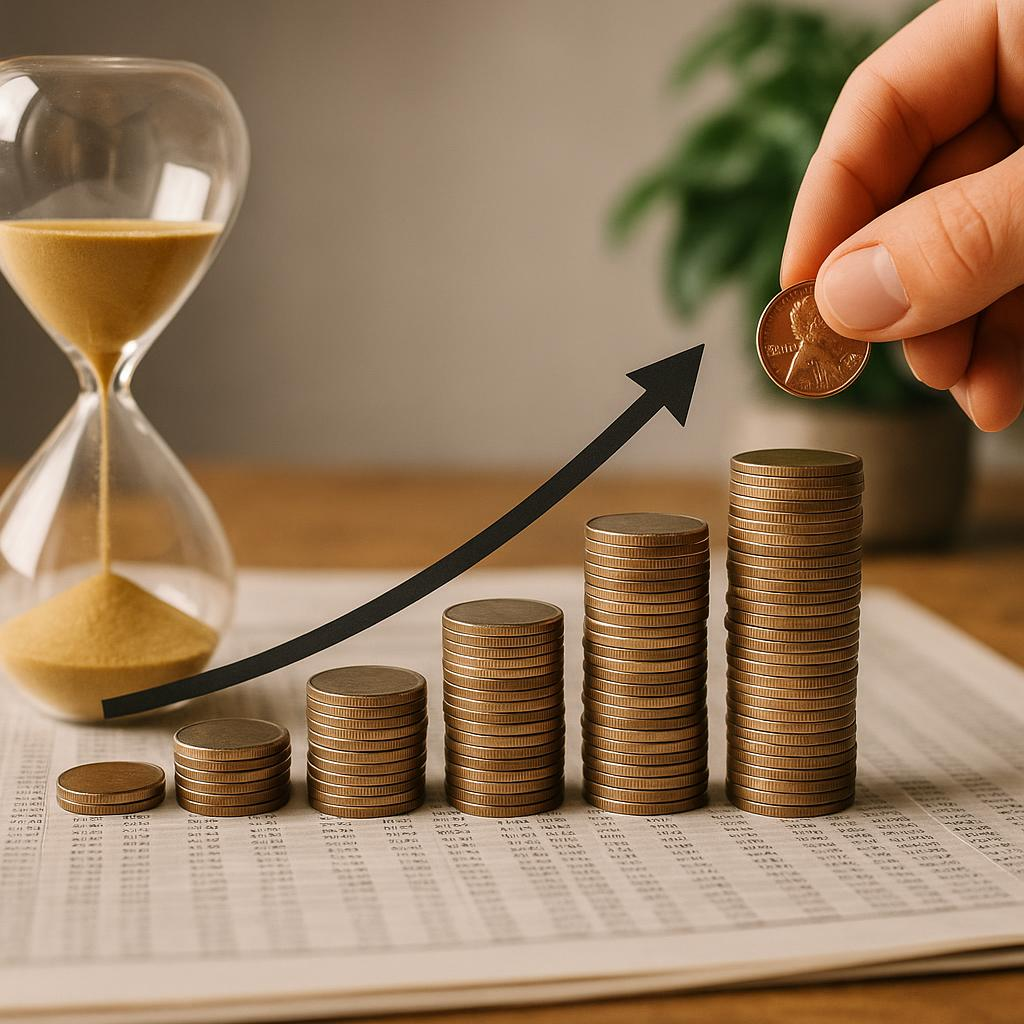
Understanding Compound Interest: The Investor’s Best Friend
Compound interest is the process where the returns on an investment generate their own earnings over time. Unlike simple interest, which is calculated only on the initial principal, compound interest grows exponentially as interest is earned on both the principal and accumulated interest. This mechanism can significantly boost investment growth if given enough time.
Think of compound interest as a snowball rolling down a hill. Initially, it starts small, but as it gathers more snow (returns), it grows faster and faster. This effect highlights why early investing can be extremely powerful. The longer your money is invested, the more pronounced the compounding effect becomes.
- Interest earned is reinvested to generate additional earnings.
- Growth accelerates over time due to exponential accumulation.
- Longer investment periods maximize the benefits of compounding.
The Crucial Role of Time Horizon in Investing
The time horizon is the length of time an investor plans to hold an investment before needing to access the funds. It directly influences the risk tolerance and investment strategy. Longer time horizons allow for greater exposure to growth-oriented assets like stocks, which typically offer higher returns but come with more volatility.
When combined with compound interest, a longer time horizon can dramatically improve investment outcomes. This is because the effects of market fluctuations even out over time, and the compounding mechanism has more periods to work its magic.
- Longer horizons support riskier but higher-return investments.
- More time allows recovery from market downturns.
- Compounding effects intensify over extended periods.
Early Investing: Why Starting Soon Matters
Starting to invest early is one of the most effective ways to leverage compound interest and time horizon. Even small amounts invested early can grow substantially due to the exponential growth factor. Delaying investing means missing out on valuable compounding periods, which can be difficult to compensate for later.
For example, someone investing consistently in their 20s can accumulate much more wealth by retirement than someone starting in their 40s, even if the latter invests larger amounts. The power of time combined with compounding makes early investing a cornerstone of financial success.
- Early contributions benefit from longer compounding periods.
- Small amounts grow significantly over decades.
- Delaying investing reduces total accumulated wealth potential.
How Compounding Frequency Impacts Growth
The frequency with which interest is compounded can affect the total investment returns. Interest can be compounded annually, semi-annually, quarterly, monthly, or even daily. The more frequent the compounding, the faster the investment grows, as earnings begin generating returns more often.
While the difference between daily and annual compounding might seem subtle at first, over long periods it can translate into noticeable additional wealth. Investors should understand their investment’s compounding schedule to fully grasp potential growth.
- More frequent compounding leads to faster growth.
- Even small differences in compounding intervals impact final returns.
- Investors should review terms to understand compounding schedules.
Real-Life Example: Comparing Investment Outcomes
Consider two investors: Investor A starts investing $2,000 annually at age 25, while Investor B begins investing $4,000 annually at age 40. Assuming a 7% average annual return compounded yearly, Investor A will likely end up with a higher retirement balance despite contributing less each year. This difference is due to the extended time horizon and compounding effect working longer for Investor A.
This example illustrates how investing earlier with smaller amounts can outperform larger, later contributions. Time and compounding are powerful allies that can outweigh the absolute amount invested.
- Time horizon can be more impactful than contribution size.
- Consistent investing over time enhances compounding benefits.
- Starting early reduces the pressure to invest large sums later.
Actionable Tips to Maximize Compound Interest and Time Benefits
Investors can take practical steps to harness the benefits of compound interest and time horizon for better investment results. First, start investing as early as possible, even if the initial amount is small. Consistency is key to building wealth over time.
Second, choose investments with compounding features and understand their compounding frequency. Third, maintain a long-term perspective and avoid reacting impulsively to market volatility, allowing compounding to work uninterrupted.
- Begin investing early and contribute consistently.
- Understand and select investments with favorable compounding terms.
- Stay patient and focused on long-term goals despite short-term market changes.
By understanding and applying the principles of compound interest combined with a suitable time horizon, investors can significantly improve their chances of achieving long-term financial success.